

Recurrent UTIs in Women: Why Hormones Matter More Than You've Been Told
Most physicians treating recurrent UTIs in women are missing half the picture. Estrogen gets some attention. Testosterone almost never does. And yet the female urethra is rich in androgen receptors, depends on testosterone for its resilience and thickness, and becomes significantly more vulnerable to bacterial colonization when those levels decline. This is not experimental medicine. This is physiology that has simply never made it into the standard of care.

Low Libido in Women: Exploring Options Beyond Testosterone
Low desire is one of the most common concerns I hear from women, especially during perimenopause and menopause. But low libido is not simply a hormone problem, and it is not a personal failure. Desire is shaped by hormones, stress, nervous system regulation, relationship dynamics, sleep, mental health, and overall wellbeing.
In this article, Dr. Evelin Dacker explores the complex roots of low desire in women and discusses evidence-based options that may help support arousal and sexual connection, including PT-141 (Bremelanotide), Addyi (Flibanserin), cannabis, and a more holistic approach to female sexual health and vitality.
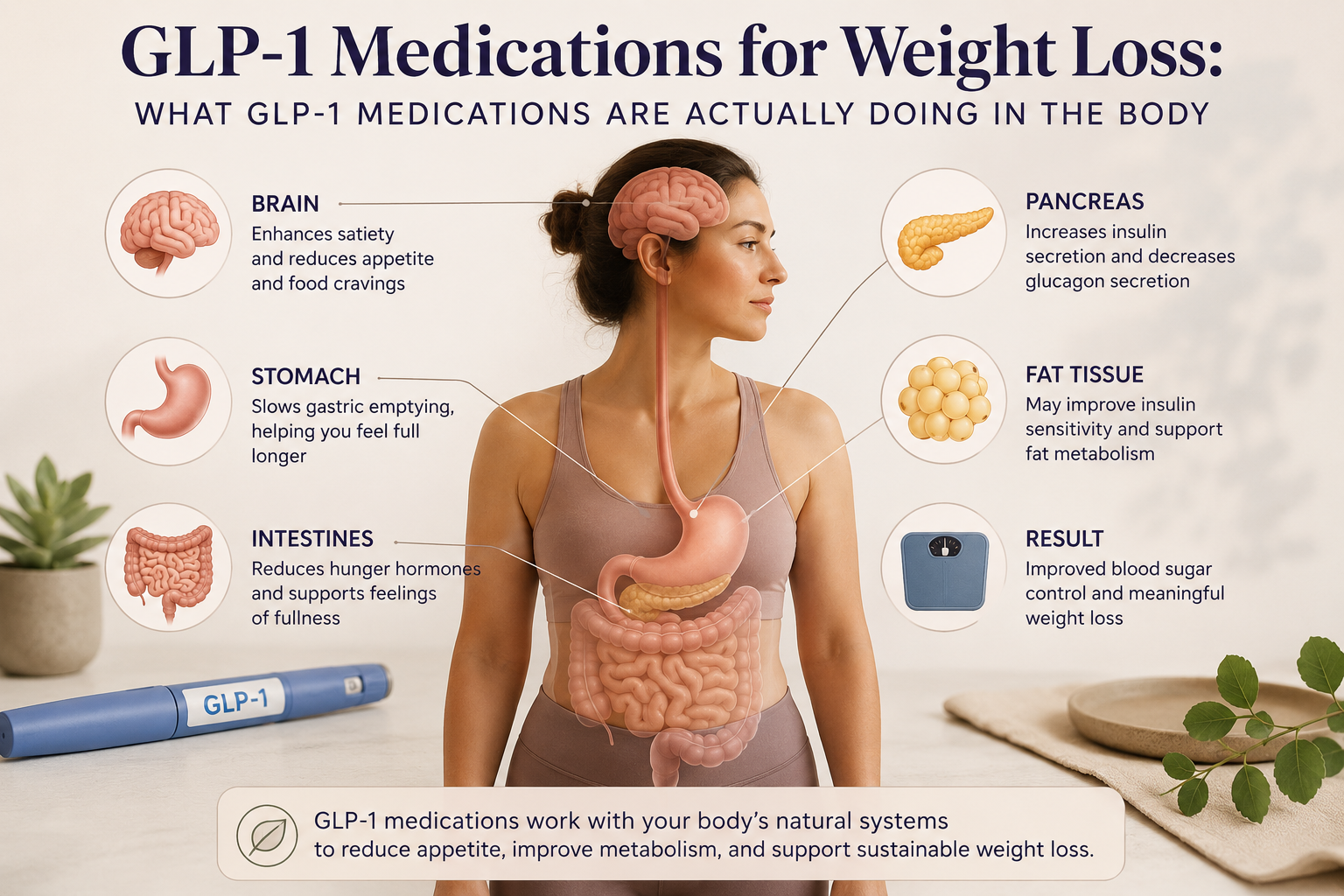
GLP-1 Medications for Weight Loss: What GLP-1 Medications Are Actually Doing in the Body
GLP-1 medications are doing far more than simply suppressing appetite. These medications act on complex hormonal systems involving the brain, pancreas, stomach, fat tissue, insulin signaling, and energy expenditure. Understanding how semaglutide, tirzepatide, survodutide, and retatrutide actually work helps explain why they are changing the future of obesity and metabolic medicine.