
Low Libido in Women: Exploring Options Beyond Testosterone
It’s one of the most common things I hear from women, especially in midlife, but also across all ages. “I just don’t feel it anymore.” Or, “I want to want it, but it’s not there.”
And what frustrates me most is how quickly this gets reduced to either hormones or something being “wrong.” There is more happening beyond hormones alone! We have brain chemicals that also come into play!
Desire is not that simple. It lives in your brain, your nervous system, your relationships, your stress load, your sense of safety, your hormones, and your lived experience. It is layered. And when we ignore that, we miss the opportunity to actually help.
That said, there are tools that can support desire and arousal. Not as a fix, but as part of a holistic approach that goes beyond hormone adjustments, relationship counseling, sex therapy, and somatic awareness.
Let’s talk about three things that many people outside of sexual medicine are not familiar with or even aware exist.
Bremelanotide, also known as PT-141.
This is one of the few medications that works directly on the brain’s arousal pathways. Not hormones. Not lubrication. The actual signal of desire.
It’s used as needed, meaning you don’t take it every day. You inject it about 45 minutes before intimacy, and it works by activating melanocortin receptors in the brain, essentially turning up the volume on arousal.
What I like about it is that it meets women where they are. You don’t have to commit to a daily medication. You don’t have to change your hormones. It’s responsive, not constant.
The most common side effect is nausea, especially the first time. Some women notice flushing or a mild headache. But for many, it’s the first time they feel a shift in desire that actually feels like it’s coming from within.
And this is important to understand. The peptide PT-141 is the same active compound as bremelanotide. I offer this through my office in a compounded form, which gives more flexibility in how it’s used.
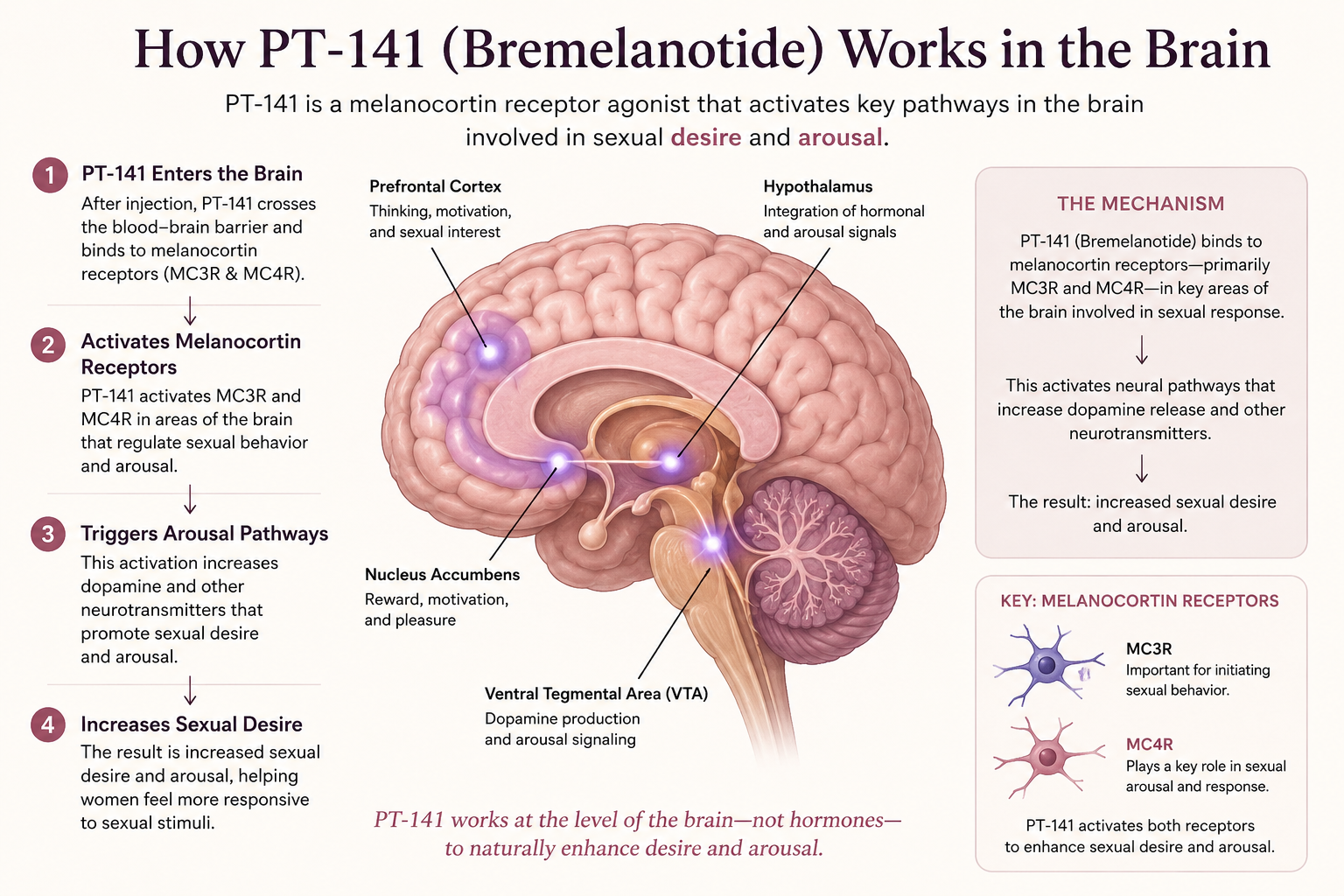
Medical infographic illustrating how PT-141 (Bremelanotide) works in the brain to enhance female sexual desire and arousal. Diagram highlights melanocortin receptors MC3R and MC4R and brain regions including the hypothalamus, prefrontal cortex, nucleus accumbens, and ventral tegmental area involved in motivation, reward, and sexual response.
Image created by ChatGPT and reviewed by Dr. Dacker for accuracy
Flibanserin, often called Addyi.
This one works very differently. It’s not on-demand. It’s a daily medication that shifts neurotransmitters over time, increasing dopamine and norepinephrine while lowering serotonin, which in some people can suppress desire.
This is more of a baseline reset. It’s for women who feel like desire is just… gone. Not situational. Not about a specific partner or moment. Just absent.
But it requires consistency, and it comes with trade-offs. It can cause dizziness, fatigue, and low blood pressure. And alcohol is not recommended with it, which matters for a lot of women.
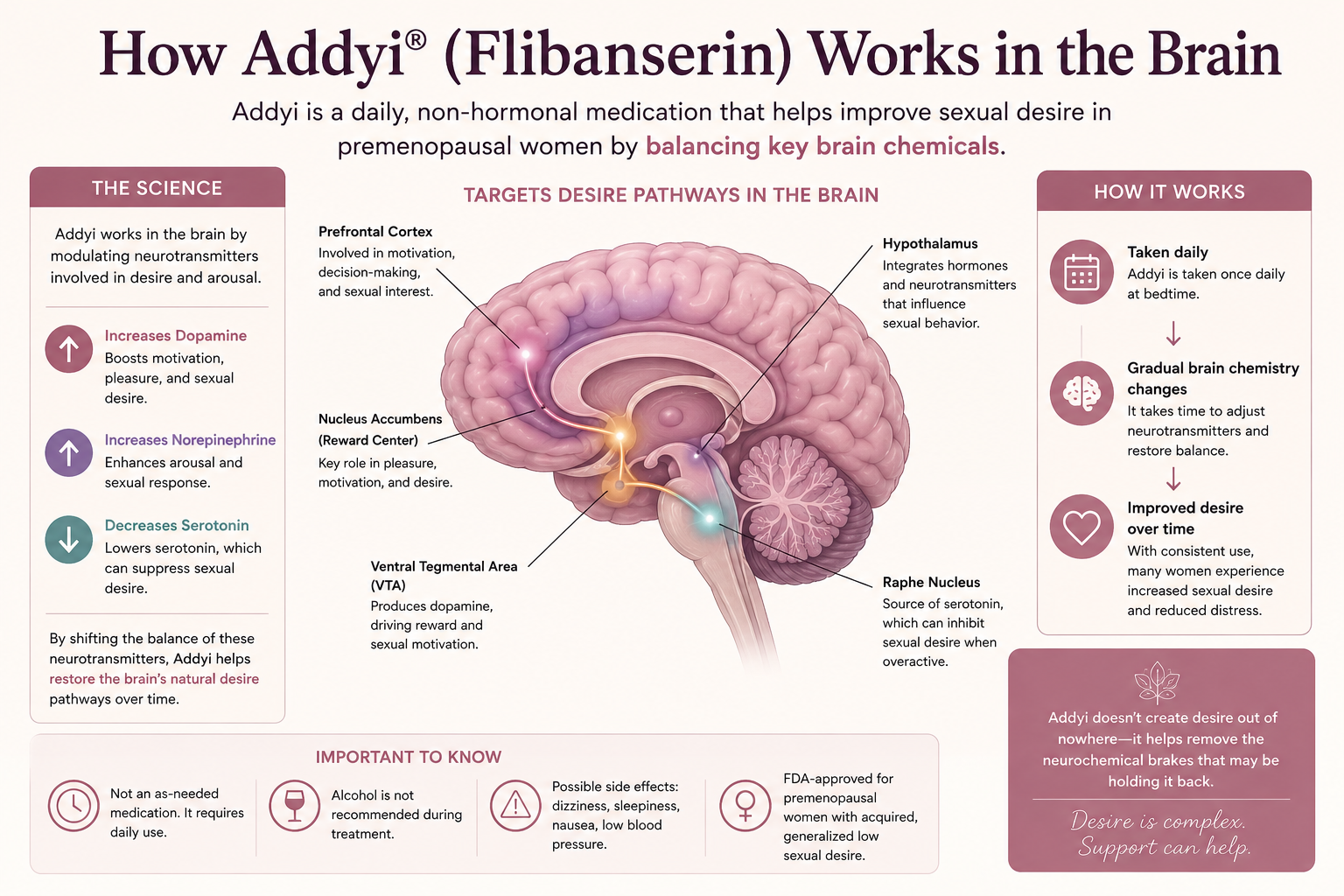
Alt text: Medical infographic showing how Addyi (Flibanserin) works in the brain to support female sexual desire. Diagram highlights neurotransmitters dopamine, norepinephrine, and serotonin, along with brain regions involved in motivation, reward, and arousal pathways. Includes information about daily dosing, gradual brain chemistry changes, potential side effects, and the role of Addyi in treating low libido in women.
Image created by ChatGPT and reviewed by Dr. Dacker for accuracy
Cannabis
Cannabis works through the endocannabinoid system. For some women, it reduces anxiety, quiets the mental noise, and allows them to actually drop into their body. It can heighten sensation and make touch feel more vivid.
For others, it does the opposite. It creates anxiety, disconnection, or numbness.
This is where dosing and self-awareness matter. Low dose (like 2.5 mg edible). Intentional use.
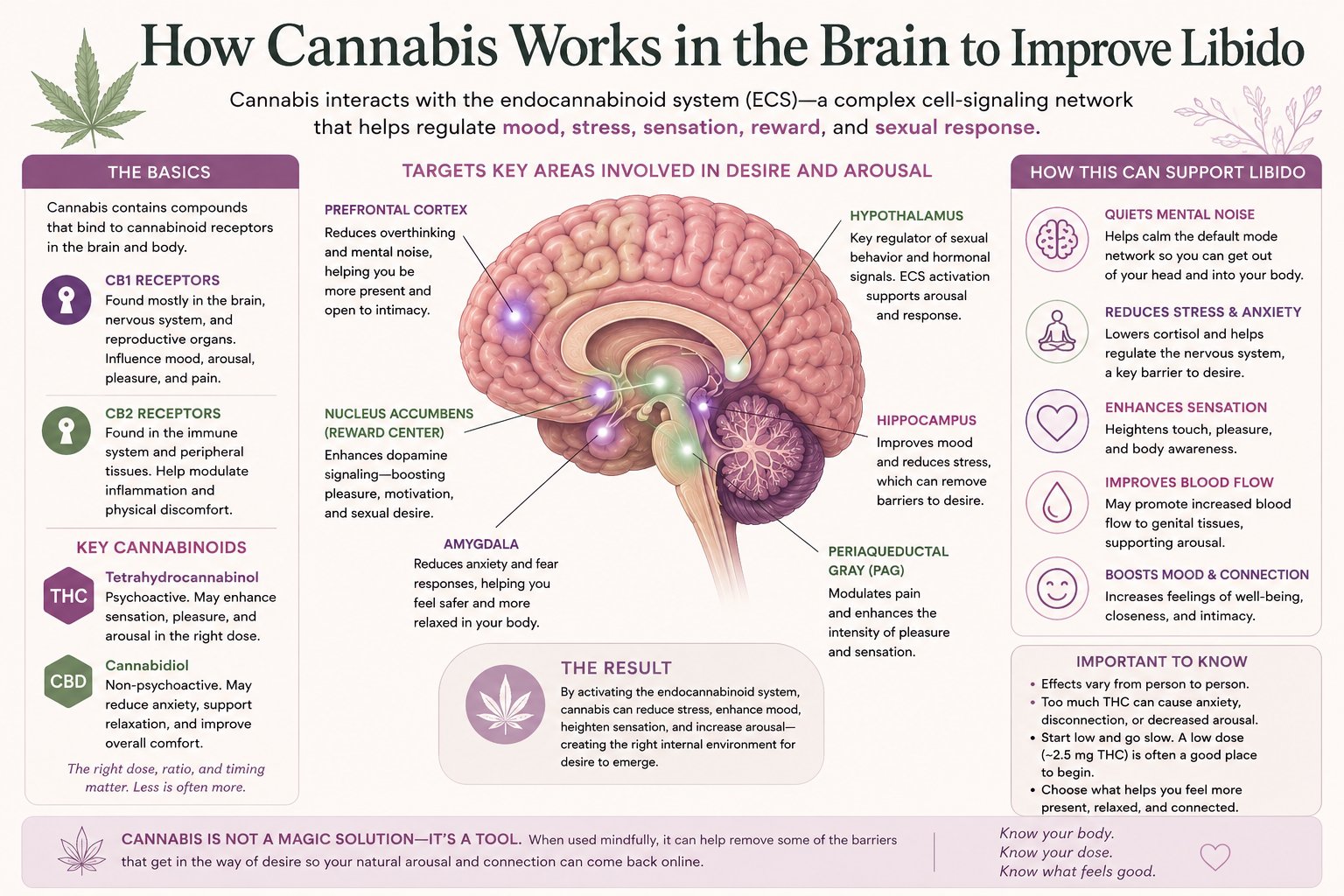
Medical infographic explaining how cannabis affects the brain and endocannabinoid system to support libido and arousal. Diagram highlights brain regions involved in pleasure, stress reduction, sensation, reward, and sexual response, including the prefrontal cortex, hypothalamus, amygdala, and nucleus accumbens. Includes information about THC, CBD, cannabinoid receptors, mood, relaxation, and mindful low-dose cannabis use for female sexual wellness.
Image created by ChatGPT and reviewed by Dr. Dacker for accuracy
None of these are magic.
They are tools.
And the deeper question is always the same. What is getting in the way of your desire?
Is it hormonal? Neurological? Relational? Exhaustion? Resentment? A nervous system that never feels safe enough to open?
Because you can’t medicate your way out of a life that doesn’t feel aligned.
But you can support a body that is ready to come back online.
If you’re curious about any of these options, or you’re just tired of feeling disconnected from your own desire, this is work we can do together.
Not to fix you.
But to help you feel again.
