
The Bone Bank: What You Build Now Matters Late
If brain fog is the symptom women talk about, our bones are the ones we panic about when it is too late.
We rarely discuss bone health and really only start to address it when it is too late. Bone loss shows up in subtle ways: you get shorter, the spine begins to curve, and bones break more easily.
The problem is that the consequences of osteoporosis can be much bigger than we realize. A hip fracture in an older adult can be a life-changing event. Roughly 20 to 25 percent of people die within the first year after a hip fracture, and many of those who survive never regain the mobility or independence they had before. About 40 percent are unable to walk independently a year later, and many will need ongoing assistance with daily activities. Vertebral spine fractures may be less dramatic when they happen, but they can lead to chronic pain, loss of height, a curved spine, decreased mobility, and an increased risk of another fracture. Once you have one osteoporotic fracture, your risk of having another goes up significantly.
Bone mass typically peaks around age 30. Think of this as your bone bank. Everything you do during childhood, adolescence, and early adulthood, including nutrition, exercise, hormones, genetics, and even how much muscle you build, helps determine how much bone you have in that bank when you enter midlife.
After that, we slowly begin making withdrawals.
Bone is not a static structure. It is constantly being broken down and rebuilt through a process called bone remodeling. Osteoclasts remove old bone and osteoblasts build new bone in its place. Estrogen plays an important role in keeping those two processes balanced. As estrogen begins fluctuating and eventually falls during the menopause transition, bone breakdown starts happening faster than bone can be rebuilt.
This is why menopause matters so much for bone health. Bone loss accelerates during the years immediately surrounding the final menstrual period, and women can lose a meaningful amount of their bone density during this relatively short window. The greatest losses tend to occur beginning in late perimenopause and continuing through the first several years after menopause. You don't feel it happening. There is no bone-loss symptom that tells you it is time to pay attention.
If you wait until a routine bone scan at 65 to start thinking about your bones, you're playing catch-up on something that started decades earlier. I would much rather have women start thinking about bone health in their 40s and 50s, while we still have an opportunity to preserve what they have.
Build muscle to build bone
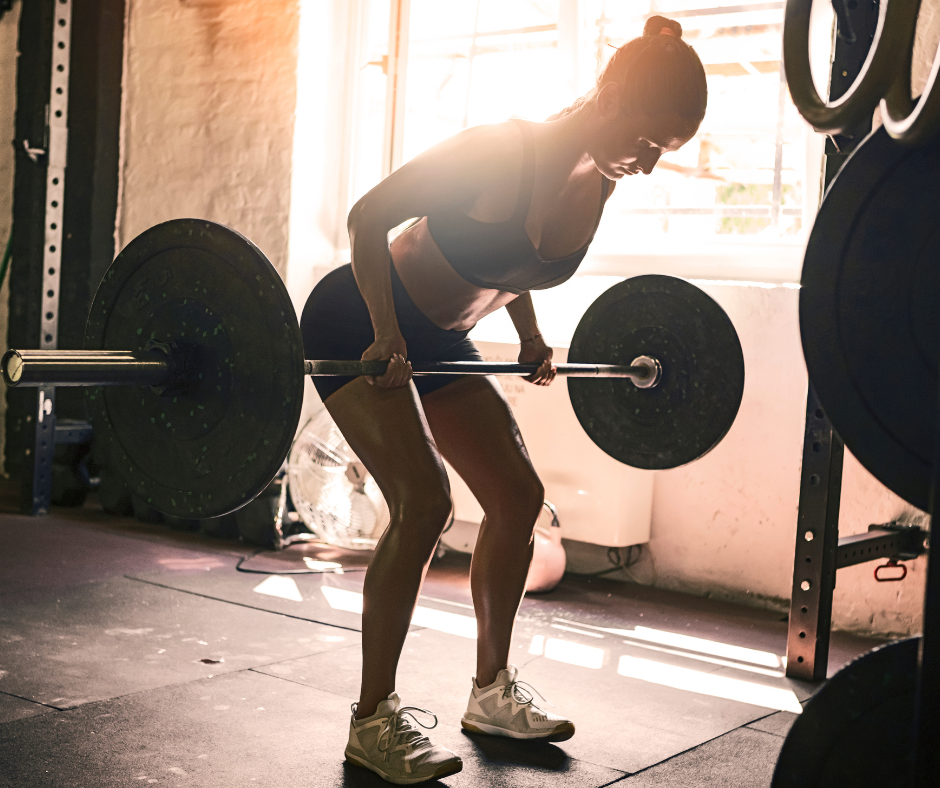
One of the most important things you can do for your bones is use them.
Bone responds to load. When muscles pull against bone and your skeleton has to support weight, that mechanical stress sends a signal that says, essentially, we need this bone, keep it strong.
Walking is wonderful for your heart, your brain, and your overall health, but walking alone is not enough for optimal bone health. Your bones need resistance and impact.
That means lifting weights. Squats, lunges, deadlifts, presses, rows, carries, and other exercises that progressively challenge your muscles also challenge your bones. You don't have to become a bodybuilder, but the weight needs to be heavy enough that your body actually has to adapt.
Weight-bearing impact matters too. Depending on your joints, balance, and fracture risk, that can mean brisk walking, hiking, climbing stairs, dancing, jogging, jumping, hopping, or other activities where your skeleton has to work against gravity.
And don't forget balance. Strong bones help prevent a fracture, but not falling in the first place is just as important.
Feed your bones
Bone needs raw materials.
Protein. Bone is not just calcium. Roughly half of bone by volume is protein, primarily collagen, which creates the framework onto which minerals are deposited. Maintaining muscle also becomes increasingly important as we age because muscle protects bone and reduces fall risk.
For most healthy midlife and older women, I generally want protein intake around 1.0 to 1.2 grams per kilogram of body weight per day, and sometimes more for women who are actively strength training.
Calcium. Most women over 50 need about 1,200 mg of calcium per day from food and supplements combined. I prefer getting as much as possible through food and supplementing only what is missing rather than automatically taking large doses of calcium.
Vitamin D helps you absorb calcium. I prefer checking a vitamin D level rather than blindly taking increasingly large doses. The goal is adequacy, not the highest number you can achieve.
Smoking accelerates bone loss and increases fracture risk. Excessive alcohol doesn't help either.
Don't wait until 65 to know your baseline
Routine osteoporosis screening is generally recommended for women beginning at age 65, but 65 should not be interpreted as the first time anyone should think about bone density.
Earlier screening may make sense if you have risk factors such as a parent who fractured a hip, early menopause, surgical menopause, prolonged periods without menstruation, low body weight, an eating disorder, smoking, long-term steroid use, rheumatoid arthritis, malabsorption or celiac disease, certain medications, or a previous fracture that occurred with surprisingly little trauma.
Family history matters too. If your mother had severe osteoporosis, lost significant height, developed a pronounced curve in her spine, or broke her hip, I want to know that long before you turn 65.
Your bone-health plan
Start by knowing your risk. Ask about osteoporosis in your family, especially hip fractures and vertebral fractures. Look at your own history for fractures, early or surgical menopause, periods of low estrogen, the use of Depo-Provera, or steroid medications that affect bone, smoking, low body weight, and other conditions that increase bone loss. If you have meaningful risk factors, talk to me about whether a baseline DEXA scan makes sense before age 65. I like to obtain one right after menopause and at age 60, even if insurance won’t pay for it.
Then start loading your bones. Aim for resistance training at least two to three times a week, with progressive increases in weight or resistance as you get stronger. Add regular weight-bearing activity and, when appropriate for your body, some higher-impact activity. Include balance work several times a week, especially as you get older.
Eat enough protein, aiming for roughly 1.0 to 1.2 g/kg/day, and spread it throughout the day. Get approximately 1,200 mg of calcium daily after age 50, preferably from food first. Make sure you are getting enough vitamin D, and check a level if there is concern that you are deficient.
Don't smoke. Keep alcohol moderate. Eat enough. Being chronically under-fueled, especially while exercising heavily, is not good for your bones.
And during perimenopause, talk about estrogen. Menopausal hormone therapy is not appropriate for everyone and should not be reduced to simply an osteoporosis medication, but preventing bone loss is one of its well-established benefits. The menopause transition is an important time to have that conversation rather than waiting until significant bone has already been lost.
Most importantly, start now. Bone responds to what you repeatedly ask it to do. Muscle responds the same way. The goal isn't simply to have a better DEXA scan.
This isn't just about avoiding a fracture at 80. It's about being the grandmother who can still get down on the floor to play, hike the trail, carry her own groceries, lift her suitcase into the overhead bin, and get back up again.
We are not trying to build bones that simply don't break. We are building a body that can continue to carry us through the life we want to live.
