Your Heart Is Part of Your Brain
If you had to choose between your 30-year-old brain and your body for the rest of your life, what would you choose?
My answer has never wavered: my brain! I know my body will slowly become more frail, but as long as I can think, I am.
Brain fog often starts many of my conversations with patients about our brain health. I understand how triggering it can feel to start forgetting words, losing our train of thought, or wondering whether this is a sign of something more serious. Protecting our cognition matters!
Surprisingly, the heart plays a significant role in our ability to stay mentally spry and youthful. By this, I mean both the physical heart that pumps blood through our bodies and the emotional heart that connects us to other people and gives our lives meaning. We need both a healthy internal cardiovascular system and an external social network to keep our brains as capable as possible.
Your Brain Depends on Healthy Blood Vessels
We tend to think about heart disease and brain health as two separate issues, but they share the same vascular system. Our brain needs a continuous supply of oxygen and nutrients, delivered through an extensive network of blood vessels. When those vessels become compromised, our brain function pays a price.
High blood pressure, elevated blood glucose, insulin resistance, abnormal cholesterol levels, and smoking all contribute to vascular injury. Over time, these changes can affect memory, attention, and processing speed. They can also increase the risk of stroke and vascular cognitive impairment.
What happens to our blood vessels in midlife can influence how well our brains function decades later. Pay attention to your cardiovascular health long before memory problems appear.
Blood pressure is especially important. Hypertension often develops without symptoms, so you can feel well while elevated pressure gradually damages the small blood vessels in your brain. Midlife hypertension is associated with a greater risk of cognitive decline and dementia later in life. Blood pressure may also rise during and after the menopause transition, even in women who have always had normal readings.
Glucose metabolism deserves the same attention. Insulin resistance and type 2 diabetes are associated with poorer vascular health and an increased risk of cognitive decline. Insulin resistance, which can lead to prediabetes and type 2 diabetes, can develop even when your weight has not changed significantly, so the number on the scale may not be fully reassuring. After age 50 and post-menopause, it becomes especially important to monitor insulin, glucose, and hemoglobin A1C so we can catch it early and make lifestyle changes before they cause irreversible damage to our organs, blood vessels, and brain.
A whole-food, plant-based diet, such as the Mediterranean diet, is often our best defense. Yet it is hard to change eating habits once a problem has started, so I recommend learning how to choose healthy foods as early in your life as you can. Don’t put off a healthy diet just because you can get away with eating junk food when you are young!
[I will address diet more in my next blog post.]
Cholesterol is another part of the picture. Elevated LDL, ApoB, and Lp(a) cholesterol contribute to plaque buildup in the arteries, increasing the risk of heart attack and stroke. Its relationship with dementia is more complex, but identifying and treating cardiovascular risk factors can help protect the blood vessels that supply your brain. Atherosclerosis (when blood vessels are damaged by plaque buildup) is complex, and we are still learning best practices for addressing it. My short recommendation comes from Michael Pollan: “Eat real food, mostly plants, and not too much of it.” I wish it were that simple, but it is a good place to start.
I encourage everyone to know their blood pressure, glucose or hemoglobin A1c, lipid cholesterol levels, and overall cardiovascular risk. Regular movement, strength training, good sleep, nutritious food, and appropriate medical treatment as indicated all support vascular health. These are practical ways to care for your heart and brain together.
(I am currently taking a six-week course on atherosclerotic disease, so I am sure I will be writing more about it soon!)
Your Emotional Heart Needs Attention, Too
My healthiest patients are those who keep showing up in connection with others. When their bodies start to slow down, their social network holds them afloat.
I think about the friends who make me laugh, the conversations that leave me thinking long after they end, and the joy I feel when I dance. I love learning something new, enjoying intimacy, and being part of a community where I feel connected. These are experiences I want to keep throughout my life, and they matter greatly for my overall well-being.
Social isolation and loneliness have been studied and are associated with an increased risk of cognitive decline and dementia. Loneliness is feeling disconnected, while social isolation is having few social contacts. Touch hunger becomes more common as people age. It is rarely acknowledged or discussed, but our need for touch is part of what makes us human. Even animals need it.
There is nothing like a deep conversation for me; it is one of my favorite activities. Talking with others helps you practice listening and processing thoughts. Searching for words, interpreting other perspectives, and attuning to emotional states exercises our brain in complex ways. How many times has an encounter with someone changed how you see the world? Your brain is doing an enormous amount of work, and you may be having so much fun that you don't notice it.
Making room for friendships, conversation, and community is critical throughout our lives. Still, it can get harder when the demands of work, caregiving, and family make it easy to put those connections aside. Now that more people work remotely and rely on media rather than in-person connections, it only makes it worse. It takes effort to reach out and build and nurture relationships where you feel seen, engaged, and able to enjoy yourself, but it is “medicine” not only for the body but the soul.
Keep Learning, Moving, and Exploring Pleasure
Our brains can learn and adapt throughout life. Trying something unfamiliar asks us to pay attention, practice new skills, and form new connections. That might mean learning a language, taking a class, traveling somewhere new, playing an instrument, or spending time with people whose experiences are different from our own.
I love to dance because it brings so many of these elements together. I move my body, respond to music, coordinate my movements, and connect with other people. Sometimes I follow a familiar rhythm, and sometimes I have to adapt to something unexpected. Dance combines physical activity, attention, coordination, and often social connection. I don't do it to improve my cognitive test scores. I do it because it feels good.
Sexuality is important, too. Intimacy and pleasure engage our senses, emotions, attention, and relationships. Sexual response depends in part on healthy blood flow, which is one reason cardiovascular and metabolic health can affect genital arousal and sensation.
As much as it would be fun to think that sex prevents dementia, and some research has found associations between sexual well-being and aspects of cognitive health, it has unfortunately not been established that sexual activity prevents cognitive decline. What is important is to continue having access to pleasure and intimacy in ways that feel good, whether through partnered sex, self-pleasure, sensual touch, or affectionate connection.
Purpose is another reason to stay engaged with the world. It doesn't have to be a grand mission. It might be mentoring someone, caring for a garden, making art, volunteering, or contributing to a community you love. Having something that interests you and gives shape to your days can make life richer at every age.
Caring for Both Parts of Your Heart
There is no single activity, medication, or lifestyle change that can guarantee we will never develop cognitive impairment. But we can take meaningful steps now to support our health in the years ahead.
Thinking about protecting our brain is about much more than remembering where we put our keys. We need to remain curious, connected, and able to participate in the experiences that bring us joy.
Caring for our physical heart helps support the brain that makes those experiences possible. Caring for our emotional heart gives us reasons to keep using it.
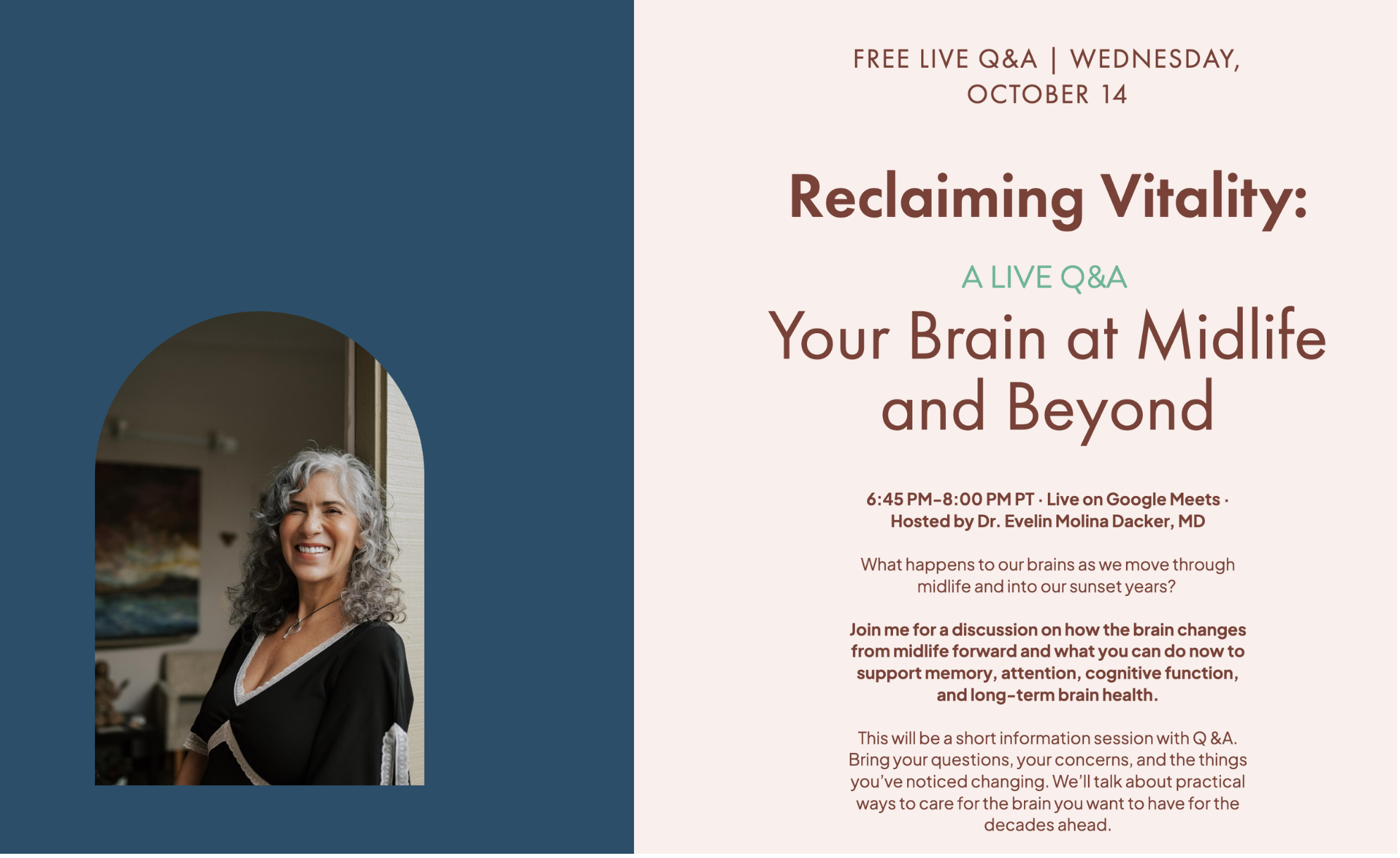
JOIN ME FOR A FREE LIVE DISCUSSION. REGISTER BY CLICKING ON THE IMAGE BELOW