
Working in the same community for the past 30 years, I have had the honor of watching people age and learning a lot from my patients. I have noticed the traits of those who remain active well into their 80s and beyond, and those that haven’t. While laboratory numbers and medical tests tell part of the story, what our bodies allow us to do tells the rest.
Can we climb stairs comfortably, carry a heavy suitcase, recover from an injury, walk across uneven ground without worrying about falling, get up off the floor, or enjoy intimacy without pain?
As we age, maintaining that physical freedom requires more than preventing disease. It requires strength, balance, mobility, coordination, and an ongoing relationship with our bodies. One of the most important ways I've found to cultivate all of these is through Pilates.
Why Pilates Has Become Such an Important Part of My Life
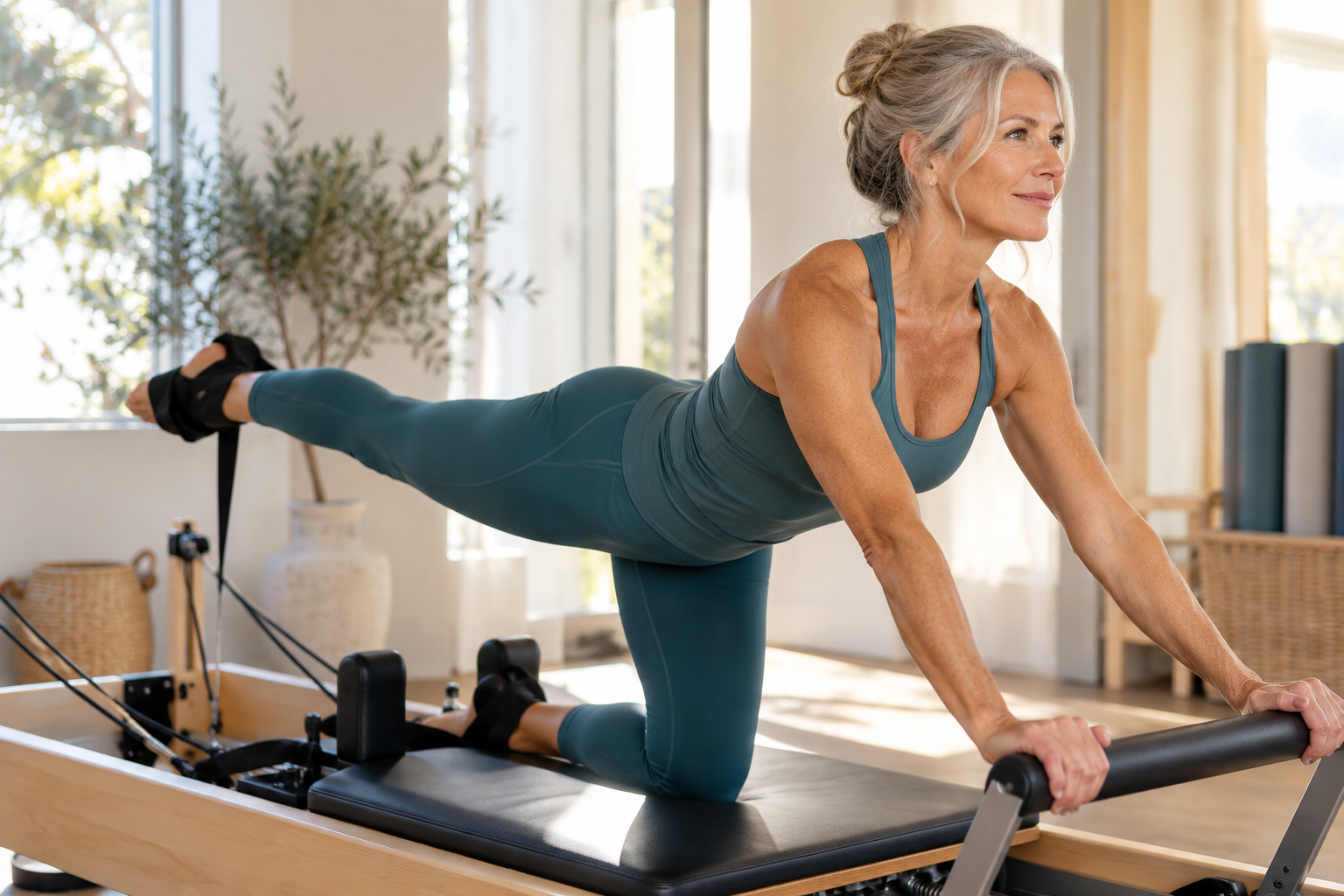
I've always valued physical activity, but Pilates has become one of my favorite ways to care for my body. I practice reformer Pilates regularly, and what I appreciate most is that it asks me to pay attention to how I move and breathe, not how hard I can push myself. Every exercise requires some combination of strength, control, breathing, coordination, and awareness. I can feel which muscles are working, where I am compensating, and when I need to slow down and move more deliberately.
Pilates was developed around the idea that movement begins with a strong, coordinated center. Joseph Pilates originally called his method Contrology, emphasizing the relationship between the mind and body, breath, precision, and controlled movement. These principles become increasingly valuable as we age because physical capability is not simply about how much force our muscles can generate. It is also about how effectively our nervous system coordinates movement, how well we maintain balance, and whether our joints can move through their available range without pain or instability.
What makes Pilates particularly appealing for women as we age is its adaptability. Reformer Pilates uses springs to provide adjustable resistance so that you can modify exercises for different levels of strength, flexibility, and physical ability. The same movement can be made more challenging for someone strong and active or adapted for someone recovering from an injury or managing joint limitations. That doesn't mean every Pilates exercise is safe for everyone, but with a knowledgeable instructor, it can be an accessible, progressive form of exercise across many stages of life.
Research suggests that Pilates can improve balance, flexibility, muscular endurance, and aspects of physical function in older adults. It can also help with certain types of chronic low back pain. The evidence is less definitive for preventing falls or fractures, and Pilates is not necessarily superior to other well-designed exercise programs. But one of its greatest strengths is that it integrates so many components of physical function into a single practice.
For me, Pilates isn't simply exercise. It's a way to stay connected to my body, notice its changes, and learn to move with greater confidence.
Core Strength Is More Than Having Strong Abdominal Muscles
When people hear the word core, they often think about abdominal exercises or having a flat stomach. But our core is much more complex than the muscles we see in the mirror. It includes the deep abdominal muscles, the muscles surrounding the spine, the diaphragm, and the pelvic diaphragm. Together, these structures help stabilize our trunk, manage pressure within the abdomen, and transfer force between our upper and lower bodies.
Our core is involved in nearly everything we do. When we stand up from a chair, lift a grocery bag, reach overhead, walk uphill, or change direction while dancing, these muscles work together to support and coordinate movement. A strong and responsive core helps us maintain posture, control our movements, and distribute physical demands across our bodies rather than placing excessive stress on individual joints.
One thing I appreciate about Pilates is that core training isn't limited to repetitive abdominal contractions. Many exercises challenge the trunk to remain stable while the arms or legs move. Others require controlled rotation, extension, or balance changes. This develops the ability to coordinate movement and maintain stability in situations that resemble everyday life.
And core strength isn't about constantly tightening our abdominal muscles. Our bodies need to contract, relax, breathe, and respond to changing demands. Excessive bracing can interfere with normal breathing and pelvic diaphragm coordination. A functional core can adapt, not remain rigid.
This becomes particularly important as we age because changes in muscle strength, joint mobility, and balance can alter how we move. We may begin compensating for weakness in one area by placing greater demands on another. Over time, those patterns can contribute to discomfort or limitations. Pilates helps us recognize these patterns and build greater control, though it cannot prevent every injury or correct every musculoskeletal condition.
The Pelvic Bowel: An Essential Part of Our Core
One of the most overlooked components of core strength is the pelvic diaphragm. I intentionally don’t use the word “floor” since a floor is hard and doesn’t move. Instead, I use diaphragm for the muscles in the lower pelvis and bowl for the entire structure. These muscles form a supportive structure at the base of the pelvis and help support the bladder, uterus, vagina, and rectum. They contribute to urinary and bowel control, sexual function, pelvic organ support, and the coordination of pressure within the abdomen.
A weak pelvic diaphragm shows up as urine leaking with coughing, laughing, jumping, or exercise. It might feel like urinary urgency, pelvic pressure, constipation, or discomfort during sex. Some women develop pelvic organ prolapse, where the bladder, uterus, or rectum descends toward or into the vagina because the supporting tissues have weakened.
These symptoms become more common with age, but they are not simply inevitable consequences of getting older. Pregnancy, childbirth, pelvic surgery, chronic constipation, obesity, repetitive increases in abdominal pressure, and changes in connective tissue can all affect pelvic function. During menopause, declining estrogen also changes the tissues of the vulva, vagina, and lower urinary tract, sometimes contributing to dryness, irritation, urinary symptoms, and painful intercourse.
However, one of the most important things I want women to understand is that pelvic dysfunction does not always mean the muscles are weak.
Some women have pelvic muscles that are underactive or poorly coordinated and cannot generate enough support when needed. Others have muscles that remain excessively tense, making it difficult to relax during urination, bowel movements, or sexual activity. Some women experience a combination of weakness and excessive tension.
Kegels are not always the right answer! A healthy pelvic bowl needs to be strong enough to provide support and flexible enough to relax. It needs to respond appropriately when we cough, lift something heavy, exercise, or have sex. Just like other muscles in our bodies, its function depends on strength, coordination, endurance, and the ability to release tension.
Pelvic physical therapy is enormously helpful in identifying which of these functions needs attention. A skilled Pelvic PT is one of my favorite collaborators in helping my patients have a long-lasting intimate life, too. I wish more women knew this care was available before spending years accepting leakage, pelvic discomfort, or painful sex as normal.
How Pilates Connects the Core, Breath, and the Pelvic Bowl
One reason I particularly appreciate Pilates is its emphasis on breathing and coordinated movement. The diaphragm, abdominal wall, spinal muscles, and pelvic bowl all work together to regulate pressure within the abdomen. This system helps stabilize our bodies while allowing us to breathe, move, lift, and respond to physical demands.
When we inhale, the diaphragm moves downward, and the pelvic diaphragm also lengthens slightly in response to changing pressure. During exhalation, the diaphragm rises, and the pelvic diaphragm follows suit. When we lift something heavy, cough, or perform a challenging exercise, these muscles coordinate differently to manage the increased pressure.
Pilates encourages awareness of these relationships. Rather than holding our breath and tightening everything as hard as possible, we learn to coordinate breathing with movement and recruit the muscles needed for a particular task.
For women who have spent years disconnected from their pelvic bowl, this awareness can be valuable. Learning to recognize when the pelvis contracts, when it relaxes, and how it responds to movement can help you develop better control. Pilates teaches us to pay attention to our bodies rather than simply forcing them to perform.
Pelvic Health Is Also Sexual Health
As a physician who specializes in menopause and sexual health, I think this is an important connection that deserves much more attention.
Our pelvic bowl muscles participate in sexual arousal, orgasm, and the physical sensations associated with sexual activity. Their ability to contract and relax can influence comfort and pleasure. When these muscles are painful, excessively tense, or poorly coordinated, penetration may become uncomfortable, and some women experience persistent pelvic pain or difficulty enjoying sex.
During menopause, the tissues of the vulva and vagina also become more vulnerable to changes in estrogen. Genitourinary syndrome of menopause can contribute to dryness, burning, painful intercourse, and urinary symptoms. Pelvic bowl dysfunction and menopausal tissue changes frequently coexist, but they require different treatments.
Vaginal estrogen or other appropriate hormonal treatments can improve the health of estrogen-responsive tissues. Pelvic physical therapy can address muscular tension, weakness, and coordination. Both approaches may be needed, and they go hand in hand.
Do not endure sexual discomfort! There are treatment options readily available.
And Pilates is a great exercise to help maintain the muscles and flexibility needed for a long and fulfilling sex life.
Balance, Flexibility, and Protecting Our Joints
Another reason Pilates has become so valuable to me is the way it combines strength with mobility and balance. People often treat these as separate goals, but in everyday life, they are inseparable.
When we step off a curb, turn quickly, reach for something on a high shelf, or walk on uneven ground, our muscles and nervous system must coordinate movement while maintaining stability. Balance depends on information from our eyes, inner ears, joints, and muscles, and our ability to respond can change with age.
Pilates challenges balance through controlled movements, changes in body position, and exercises that require the trunk and limbs to work together. It can also improve flexibility and active mobility, allowing us to move our joints through a comfortable range with greater control.
This is especially important for women with joint stiffness, arthritis, or previous injuries. Strong muscles support joints, while appropriate mobility lets us move without unnecessary restriction. Pilates can build strength and control without the repetitive impact of some other activities.
I also want to distinguish flexibility from stability. More flexibility isn't always better. Women with joint hypermobility, for example, may need greater muscular control rather than additional stretching. The goal is to have enough mobility to move comfortably and enough strength to control that movement.
For me, this is one of the most satisfying aspects of Pilates. As someone with hypermobility and often many injuries caused by that, I can feel how strengthening one area changes the way another part of my body moves. It reminds me that our bodies are interconnected systems, not collections of isolated muscles and joints.
We Still Need to Build Muscle
Although I love Pilates, we still may need more strength training I don't want women to assume it provides everything we need to preserve muscle as we age.
Sarcopenia, the progressive loss of muscle strength and mass associated with aging, is an important contributor to declining physical function. Muscle strength often declines faster than muscle size, which means maintaining the ability to generate force is particularly important.
Progressive resistance training remains one of our most effective tools for preserving muscle and strength. This means challenging our muscles with sufficient resistance and gradually increasing the demand as we become stronger.
Pilates can provide meaningful resistance, particularly through reformer springs and body-weight exercises. However, traditional strength training often makes it easier to progressively load the larger muscles of the legs, hips, and back.
I see the two as complementary. Strength training builds muscle and increases our capacity to produce force. Pilates helps develop control, coordination, mobility, and the ability to use that strength effectively.
Adequate protein is also important, especially during midlife and older age. For many healthy, physically active women, approximately 1.2 to 1.6 grams of protein per kilogram of body weight daily is a reasonable target, adjusted for medical conditions and individual needs.
This becomes especially relevant for women losing weight, whether through dietary changes or medications such as GLP-1 receptor agonists. Weight loss typically involves losing some lean tissue as well as fat. Maintaining adequate protein intake and continuing resistance training can help preserve muscle and physical function.
I don't want us to focus so intensely on becoming smaller that we sacrifice the strength we will need in the years ahead.
Staying Strong Enough to Keep Doing What We Love
I think one of the greatest mistakes we make when talking about aging is focusing so much on how long we might live that we overlook how we want to live.
I want to be able to hike, dance, travel, explore new places, and remain sexually active for as long as my body allows. I want to get down on the diaphragm and stand back up, carry my own luggage, and recover from the inevitable injuries and setbacks that come with an active life.
These abilities are not guaranteed, but neither are they entirely determined by age.
We can continue developing strength, balance, coordination, and mobility throughout our lives. Our bodies remain capable of adaptation, even in older adulthood. And while we may need to modify activities as our bodies change, modification doesn't have to mean giving up the things we love.
This is what I find so compelling about Pilates. It encourages us to work with our bodies, not against them. It challenges us to become stronger while paying attention to how we move, breathe, and respond. It creates space for both effort and awareness.
And perhaps most importantly, it offers a way to experience our bodies as something more than an appearance to manage or a collection of medical problems to prevent.
Our bodies are how we experience pleasure, connection, movement, and the world around us.
Reclaiming Vitality Is About Physical Freedom
Over the past four weeks, we've explored the foundations of physical health during menopause and beyond. We've talked about protecting our bones, understanding our metabolism, and reducing cardiovascular risk.
Now I want to bring those conversations back to everyday life.
Strong bones allow us to move with less risk of fracture. Healthy muscles support our metabolism and help us remain independent. Our cardiovascular system delivers oxygen and nutrients throughout our bodies. And a coordinated core and pelvic diaphragm support movement, continence, comfort, and sexual function.
These systems work together to help us participate in our lives.
I don't exercise to preserve a younger version of myself. I exercise because I want to keep doing the things I love. I’ve seen my active patients age well while my sedentary ones need more medical care. I’ve seen patients who prioritized nutrition stay independent and use their retirement years for joy, while others didn’t spend more time managing declining health. I’ve learned from my patients who are sexually active well into their 90s, compared to those who stopped due to their health issues after menopause.
This week, I encourage you to think about your relationship with movement. Are you doing activities that build strength and challenge your balance? Are you maintaining flexibility and mobility? Have you paid attention to your pelvic diaphragm, particularly if you experience urinary leakage, pelvic discomfort, or painful sex?
And perhaps most importantly, have you found a way of moving that you actually enjoy?
You don't have to become a Pilates enthusiast or spend hours in a gym. But you deserve to know your body can keep learning, adapting, and getting stronger throughout your life.
Reclaiming vitality isn't about trying to stay young. It's about preserving the freedom to keep living fully in the body you have.